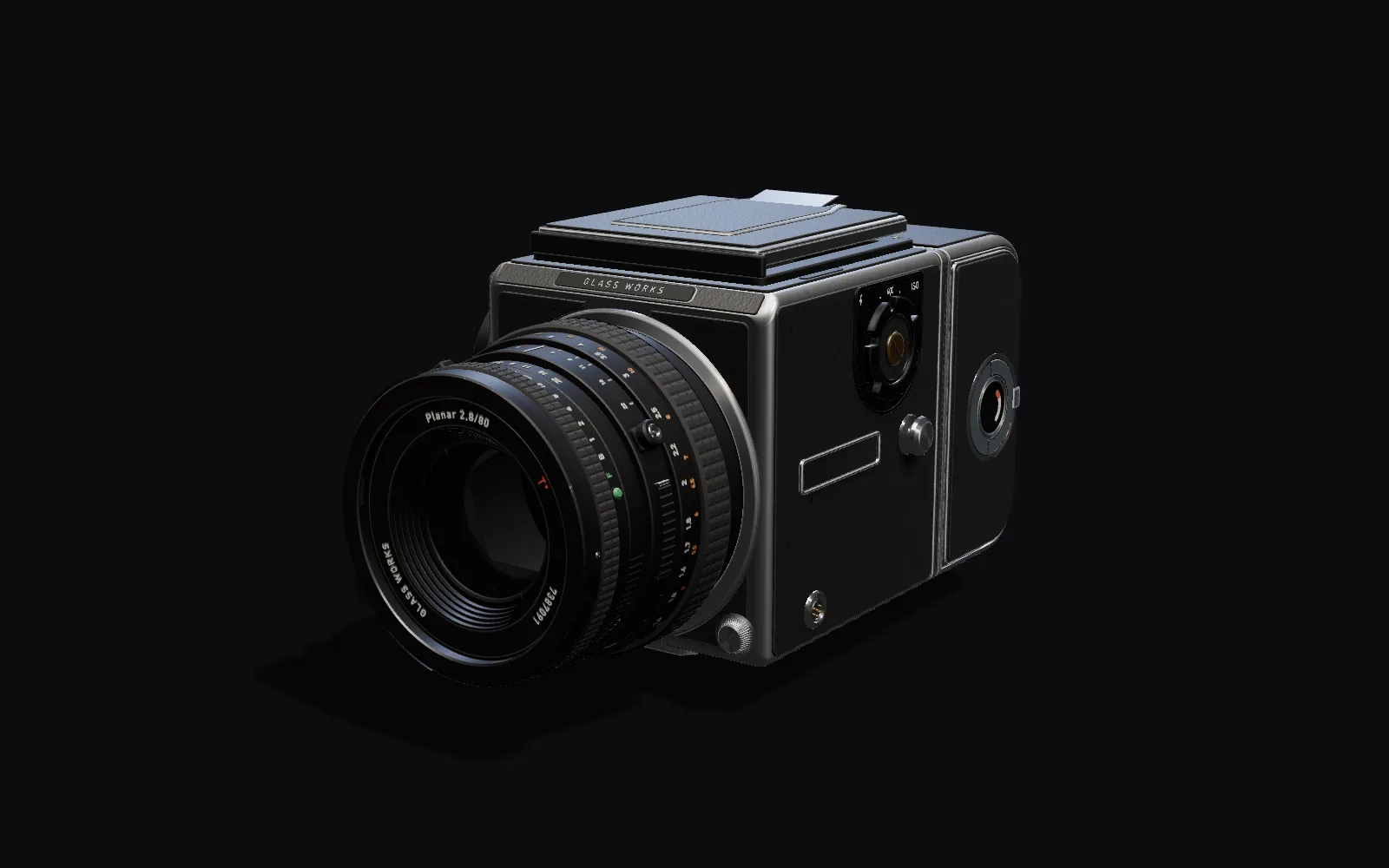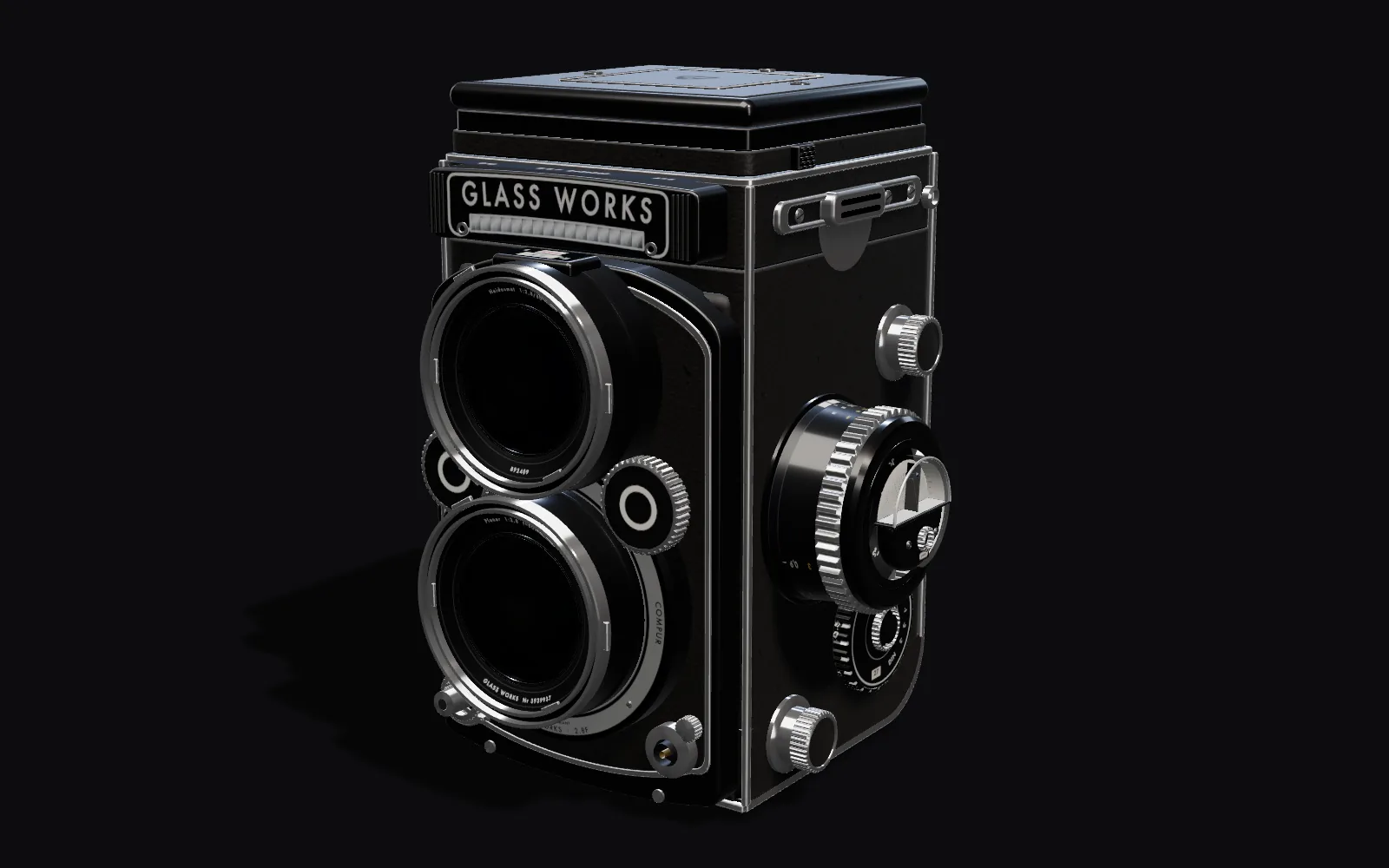
Cameras/M6
M6
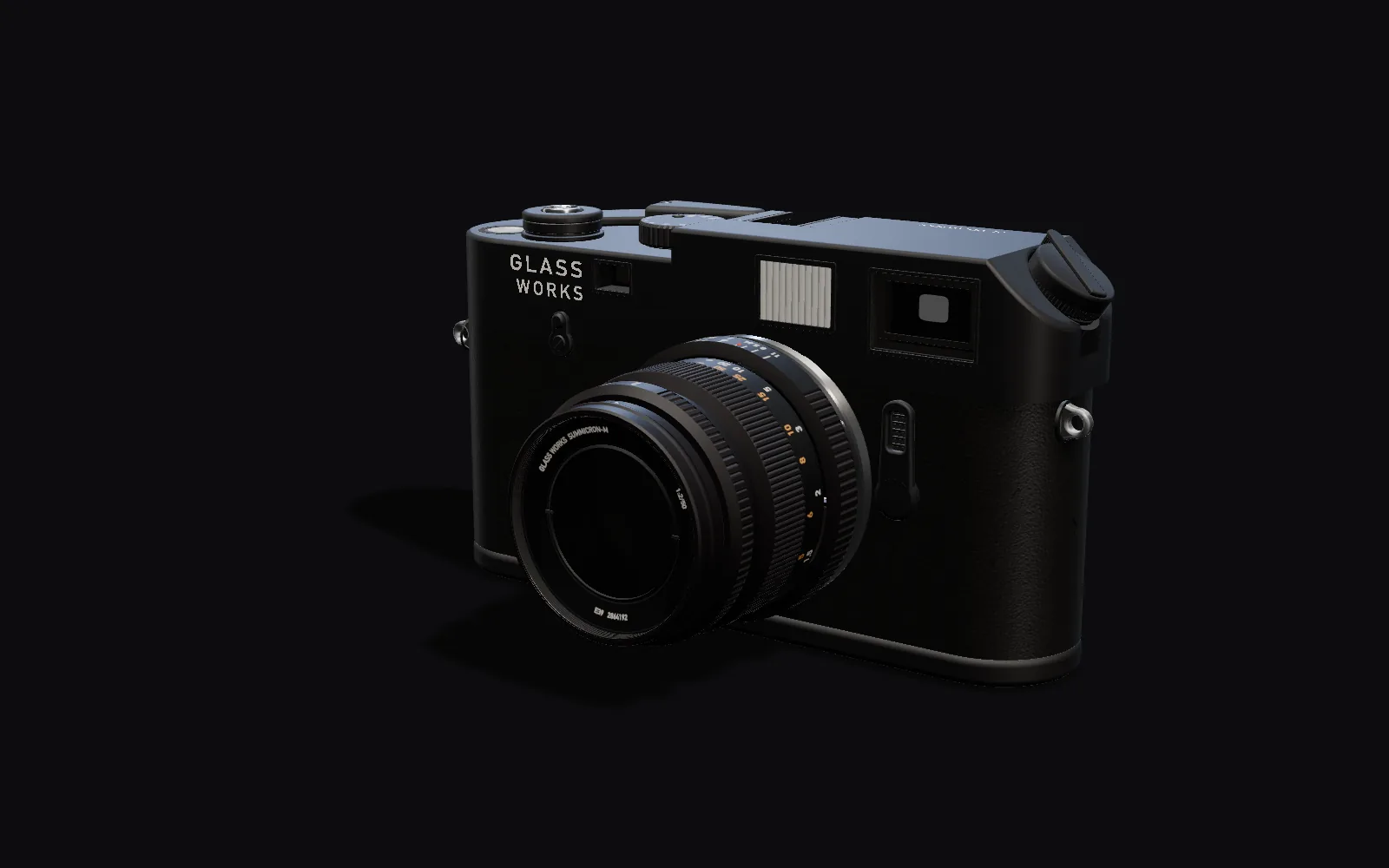
A classic rangefinder body with a light meter fitted inside, and a shutter that needs no battery.
- Take it apart in the exploded view: the lens comes forward, the top plate lifts and the baseplate drops away.
- Turn on the cutaway and fire it to see the cloth curtain, with its white meter spot, cross the gate.
- Swap the 50 mm f/2 for the 28 mm wide lens or the 135 mm tele.
Shoot a roll with the M6
Its lenses from 28 mm to 135 mm suit Yosemite's landscapes and portraits in the Loft Studio, and the Test Lab's grey cards show how its center-reading meter responds.
The M6, feature by feature
Plays from YouTube (privacy-enhanced mode). Nothing loads from YouTube until you press play. Privacy
The M6
The M line began with the M3 in 1954. It combined the viewfinder and the rangefinder in one window, and brought in a bayonet mount and frame lines that correct for parallax. The cameras that followed kept that layout. The M6 was shown at Photokina in 1984, after almost ten years without a new M design, and from the outside it looks almost exactly like the M4-P that came before it.
The difference is inside. There had been a metered M once before. The M5 of 1971 put its meter cell on an arm that swung out in front of the shutter and pulled back as you fired, and it was a larger camera with a different shape. The M6 kept the size, the finder, the shutter and the speeds of the M4-P, and put a fixed silicon cell up inside the body, out of the light's way, with no moving parts.
That cell looks at a white spot, 12 mm across, printed in the middle of the shutter's first curtain. The lens throws the picture onto the spot, so the meter reads through the lens, at the aperture you have set, from a circle in the middle of the frame. Two small red arrows at the bottom of the finder show which way to turn the aperture ring. When both glow equally, the exposure is right.
Everything else stayed mechanical. The shutter is timed by springs and gears, so with a flat battery, or none at all, the M6 fires at every speed and only the arrows go dark. Cameras made before 1988 came from Wetzlar, and production then moved to Solms. The M6 was made until 1998, when the M6 TTL replaced it, and the original came to be called the M6 Classic to tell the two apart.
The controls, one by one
The rangefinder
There is no mirror and no focusing screen. You look through a window beside the lens, and a second window 69 mm away puts a bright patch in the middle of the view. Turn the focusing ring until the two images in the patch merge into one, and the lens is focused.
Bright-line frames
The finder shows frame lines instead of changing its view. Mount a lens and its frames come up in pairs: 50 with 75, 35 with 135, 28 with 90. They move as you focus closer, to follow what the lens sees, and the lever beside the mount brings up the other pairs.
The meter
A light touch on the release turns the meter on for about ten seconds. The silicon cell reads the white spot on the first curtain, and two red arrows under the picture point the way to turn the aperture ring. The film speed is set on the dial on the back.
The shutter
Two curtains of rubberized cloth run sideways across the film, timed mechanically from one second to a thousandth, plus B. One fiftieth, marked with a lightning bolt, is the fastest speed for electronic flash. With no mirror to swing up, the finder never goes dark.
The lens
The 50 mm f/2 standard lens here is the third version, from 1969, with six elements. The front ring sets the aperture from f/2 to f/16, the focusing ring runs to 70 centimeters, and a fixed ring nearest the body carries the depth-of-field scale.
Loading through the bottom
The film goes in through the bottom, as it has on these cameras since 1925. Lift the key on the baseplate and the whole plate comes away. A hinged part of the back turns up, and the leader reaches across to three prongs on the take-up side.
What it is
| Format | 24 × 36 mm on 35 mm film |
|---|---|
| Shutter | Rubberized-cloth focal-plane, horizontal, mechanically timed |
| Speeds | 1 s to 1/1000 s and B; electronic flash at 1/50 and slower |
| Meter | Through the lens, silicon cell reading a spot on the first curtain; LED arrows; ISO 6–6400 |
| Finder | Combined viewfinder and rangefinder, 0.72×; bright-line frames in pairs, corrected for parallax |
| Lens mount | M bayonet |
| Power | Two 1.55 V silver-oxide cells or one 3 V lithium cell, for the meter only |
| Made | Wetzlar, Germany, from 1984; Solms from 1988 to 1998 |
6 lenses
- 28 mm ƒ/2.8 WideWide
- 35 mm ƒ/2 WideWide
- 50 mm ƒ/2 StandardStandard
- 50 mm ƒ/1.4 Fast StandardStandard
- 90 mm ƒ/2.8 PortraitPortrait
- 135 mm ƒ/4 TeleTele
Why it lasted
The M6 kept the M camera's way of working. There is no mirror, so the view never blacks out at the exposure, and focus is set on a bright patch in the finder. The meter took the place of a separate handheld one without changing the camera's shape or its controls. It was made for fourteen years, from Wetzlar and then Solms. Because the battery runs only the meter, a working M6 still fires at every speed with no battery in it at all, the same way the M cameras before it did.
Use this 3D model, or build another
The M6 and its 6 lenses are built procedurally in Three.js from millimetre measurements — no external meshes or textures — and published under the MIT licence.